The questions are always the same: where did the money go, what did we get for it, and can we do it for less next time?
When marketing is treated as a cost centre, every conversation starts from the wrong place. Instead of discussing where to invest for the greatest return, leadership focuses on where to cut. Instead of asking what marketing needs to deliver against its objectives, the question becomes how much can we reduce without doing too much damage.
This is a pattern that plays out in organisations of all sizes, across every sector. And the root cause is almost always the same: marketing cannot demonstrate the connection between spend and outcome quickly enough, clearly enough, or consistently enough to shift the perception.
Why does marketing struggle to prove its value?
There are several reasons why marketing teams find it difficult to position their budgets as strategic investments rather than operational costs.
The first is a reliance on metrics that do not resonate with finance or the board. Clicks, impressions and engagement rates are useful for optimising campaigns, but they do not answer the question a CFO is asking. When leadership wants to know what a six-figure investment delivered, they want to see the connection to revenue, pipeline or measurable business outcomes. If marketing cannot draw that line clearly, the numbers look like activity rather than results.
The second is a lack of real-time visibility into how budget is being spent. In many organisations, marketing spend data is assembled manually from multiple spreadsheets, agency reports and finance systems. By the time it is consolidated, it is already out of date. Leadership is making decisions based on where the budget was weeks ago, not where it is now. This makes it very difficult for marketing to demonstrate control over its own investment.
The third is the disconnect between marketing, finance and procurement. When each function works from different data sources and different assumptions, trust breaks down. Finance questions the accuracy of marketing's numbers. Marketing feels that finance does not understand the strategic rationale behind the spend. Procurement is brought in to manage costs without full visibility into the objectives the spend is designed to achieve. The result is a cycle of misalignment that reinforces the perception of marketing as a cost to be managed rather than an investment to be optimised.
What does it take to reposition marketing as an investment?
The shift from cost centre to strategic investment function requires one fundamental change: accountability. Not accountability in the sense of justifying spend after the fact, but proactive, real-time accountability that gives leadership confidence in how marketing budgets are being deployed.
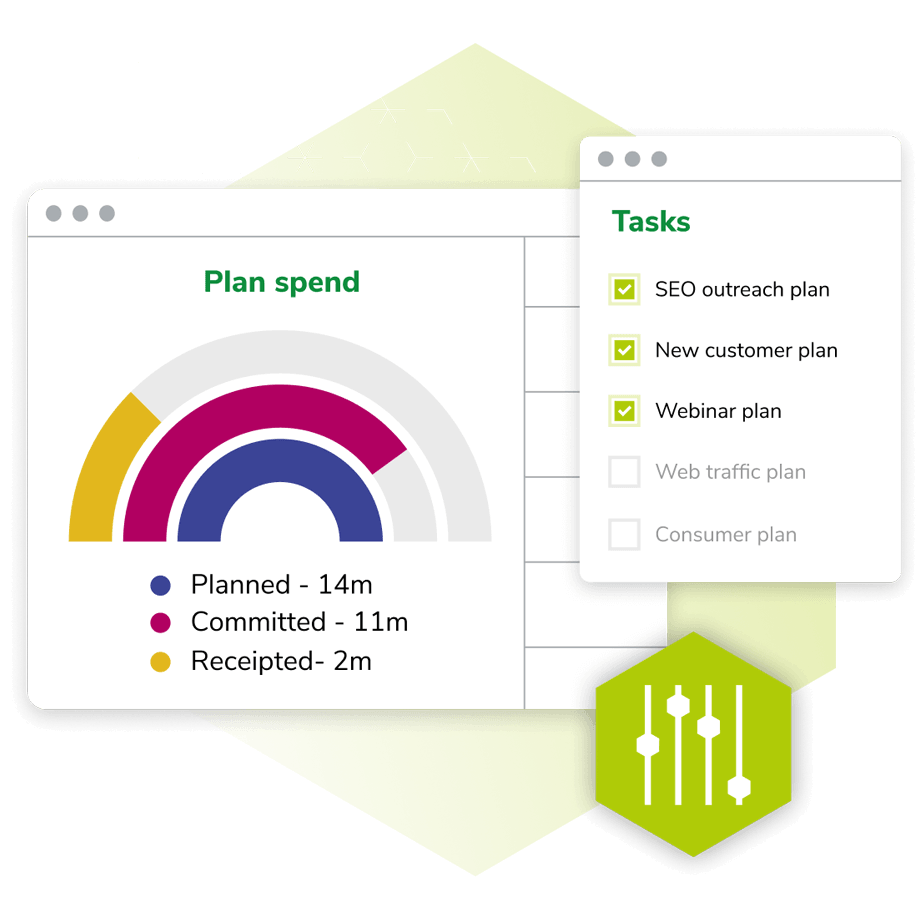
This means having a single, trusted source of data that marketing, finance and procurement can all work from. It means being able to show, at any point in the cycle, exactly how much budget has been allocated, how much has been committed, how much has been spent and what it has delivered. It means removing the manual consolidation that turns every reporting request into a multi-day exercise. And it means connecting every line of spend to a clear business objective so that when the CFO asks where the investment went, marketing has an immediate, auditable answer.
Organisations that achieve this level of visibility and control tend to find that the budget conversation changes fundamentally. Marketing stops defending its spend and starts demonstrating its contribution. Finance moves from policing costs to collaborating on strategy. And when the next budget cycle comes around, marketing is in a far stronger position to protect and grow its investment.
How Q:chi Harmoni helps marketing teams demonstrate value
Q:chi ) Harmoni is a marketing operations automation platform designed to give marketing, finance and procurement teams a shared, real-time view of planning, budgeting and spend.
Rather than relying on disconnected spreadsheets and manual reporting, Harmoni captures every element of marketing spend in a single platform. Budget allocation, commitments, approvals, actual spend and performance data are all connected, giving leadership an accurate, up-to-date picture at any point in the cycle.
Harmoni provides audit-ready dashboards that finance teams can trust, replacing static spreadsheets with transparent, verifiable data. Real-time tracking of budget consumption means marketing leaders no longer need to wait for month-end reports to understand their position. Every line of spend is linked to clear business objectives, making it straightforward to demonstrate the strategic rationale behind marketing investment. And proof-of-performance validation is built into the platform, reducing the risk of misspend and building credibility with leadership.
When marketing, finance and procurement are working from the same data, the relationship between these functions changes. Conversations that were previously about cost control become conversations about strategic investment. And marketing budgets stop being the first line item to be cut when the business is looking to save money.
Frequently asked questions
Why is marketing often treated as a cost centre?
Marketing is frequently treated as a cost centre because teams struggle to demonstrate a clear, timely connection between spend and business outcomes. When reporting relies on manual consolidation and metrics that do not resonate with finance or the board, leadership defaults to viewing marketing as an expense to be minimised rather than an investment to be optimised.
How can marketing prove its ROI to the CFO?
Marketing can strengthen its position with finance by connecting every line of spend to measurable business objectives, providing real-time visibility into budget allocation and consumption, and working from the same data source as finance and procurement. Platforms like Q:chi ) Harmoni automate this process, replacing manual reporting with audit-ready dashboards that finance teams can trust.
What is the difference between marketing as a cost centre and marketing as an investment?
When marketing is treated as a cost centre, budget conversations focus on how to spend less. When marketing is positioned as an investment, the conversation shifts to where spend can deliver the greatest return. The difference is driven by the quality, timeliness and transparency of the data that marketing can provide to leadership.
How does marketing operations automation help protect budgets?
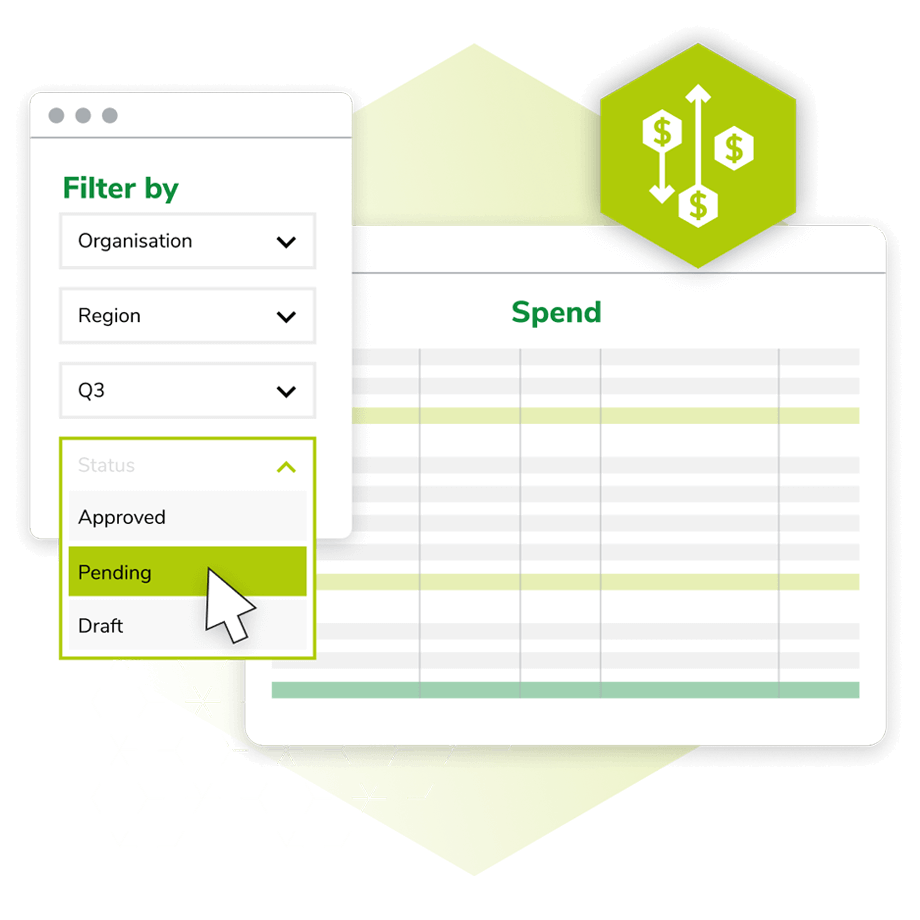
Marketing operations automation platforms provide real-time tracking of budget allocation, commitments and actual spend across every region, team and campaign. This gives marketing leaders the evidence to demonstrate that budgets are being deployed with intent and delivering against strategic objectives, which strengthens their position in budget reviews and reduces the risk of cuts.
Published: 11th March 2026
Last Edited: 25th June 2026

17th August 2026

1st June 2026

26th May 2026
22nd May 2026
14th May 2026











Get your copy of our free guide, The All-Seeing CMO. Find out how you can establish the control and visibility you need by knowing exactly what your team is planning, doing and spending.
Fill out the form to get your copy now.
Services
Q:chi 24/365 Support Q:chi Process Consultancy Q:chi Project Management Q:chi Software DevelopmentInsights
Qchi Insights Library Newsletter SubscriptionPerspectives
Q:chi for Chief Marketing Officers Q:chi for Chief Revenue Officers Q:chi for Financial Directors Q:chi for Channel Partners Q:chi for Marketing Operations Q:chi for MarketersAbout Q:chi
Find out more About Q:chi Read The Q:chi Story Q:chi Harmoni Pricing Q:chi Deployment Q:chi Privacy Policy Q:chi Sustainability Statement Q:chi Modern Slavery Statement Contact Q:chi Here