This is a pattern that plays out across organisations of all sizes, and it is remarkably consistent. Budget tracking lives in several spreadsheets. Campaign planning lives in several others. Approvals happen over email or Slack. Marketing spend commitment data is out of sync with what finance has on record. Reporting is pulled together manually by someone who knows where all the files are and how they connect. And if that person is unavailable, the process hits a roadblock.
The structure holds together. Just about. But the foundation is not the system. It is the people who have learned how to navigate the gaps between disconnected tools and inherited processes that nobody fully understands anymore.
Why do marketing operations stacks become unstable?
Marketing operations stacks become fragile gradually rather than suddenly. Each time a new requirement emerges, another layer is added. A new tool here, a new workaround there, another spreadsheet to bridge a gap between two systems that do not communicate with each other. No single addition feels risky. But each one increases the complexity of the overall structure and the effort required to maintain it.
Over time, several patterns emerge that increase the risk of failure. Operational knowledge becomes concentrated in a small number of individuals rather than embedded in the system. When those individuals are unavailable or leave the organisation, the knowledge goes with them. Data flows become dependent on manual processes that are time-consuming, error-prone and difficult to replicate consistently. Different functions work from different versions of the same data, creating misalignment between marketing, finance and procurement that is difficult to identify and slow to resolve.
The instability is not always visible day to day. The tower continues to stand. But the margin for error shrinks with every addition, and the organisation becomes increasingly vulnerable to the kind of event that pulls the wrong block.
What causes a marketing operations stack to collapse?
The events that expose the fragility of a stitched-together marketing operations stack are often unremarkable in themselves. A region overspends and nobody spots it in time because spend data was not consolidated quickly enough. Finance asks for accrual figures and marketing cannot produce them without a week of manual consolidation across multiple spreadsheets and systems. A key team member leaves and takes half the operational knowledge with them, leaving the remaining team unable to replicate processes that were never properly documented. An audit request comes in and there is no clean trail from plan to spend to outcome.
Any one of these events can be the block that brings the tower down. The consequences are tangible and often significant. Missed budget targets undermine marketing's credibility with the board. Failed audits create compliance risk. Lost alignment with finance damages a relationship that is critical to protecting future budgets. And when operational inefficiency means that marketing cannot execute at the pace the business requires, demand generation targets are missed and the commercial impact becomes impossible to ignore.
These are not hypothetical scenarios. They are outcomes that organisations experience when the operational infrastructure underneath their marketing activity is not robust enough to support the weight being placed on it.
Why do organisations delay fixing the problem?
Many marketing leaders are aware that their operations stack is precarious. They can feel the instability. They know that too much depends on specific individuals, that reporting takes too long, that the data is not as reliable as it needs to be.
The reason the problem persists is that replacing a stitched-together toolset feels like a larger and more disruptive project than continuing to live with the risk. Each individual tool in the stack is solving a problem. Removing or replacing it means finding an alternative, migrating data, retraining teams and managing the transition. When the tower is still standing, the case for a wholesale rebuild can be difficult to make.
The challenge with this logic is that the cost of the eventual collapse is almost always greater than the cost of fixing the foundation. Rebuilding after a failure is more expensive, more disruptive and more damaging to credibility than investing in the right infrastructure before the failure occurs. The organisations that act proactively are the ones that avoid the crisis entirely.
How Q:chi Harmoni replaces the Jenga tower with a solid foundation
Q:chi ) Harmoni was not built to be another block on the stack. It was designed to be the foundation underneath it, replacing the patchwork of disconnected tools with a single, connected platform where planning, budgeting, approvals, spend tracking and reporting are structured and integrated from the start.
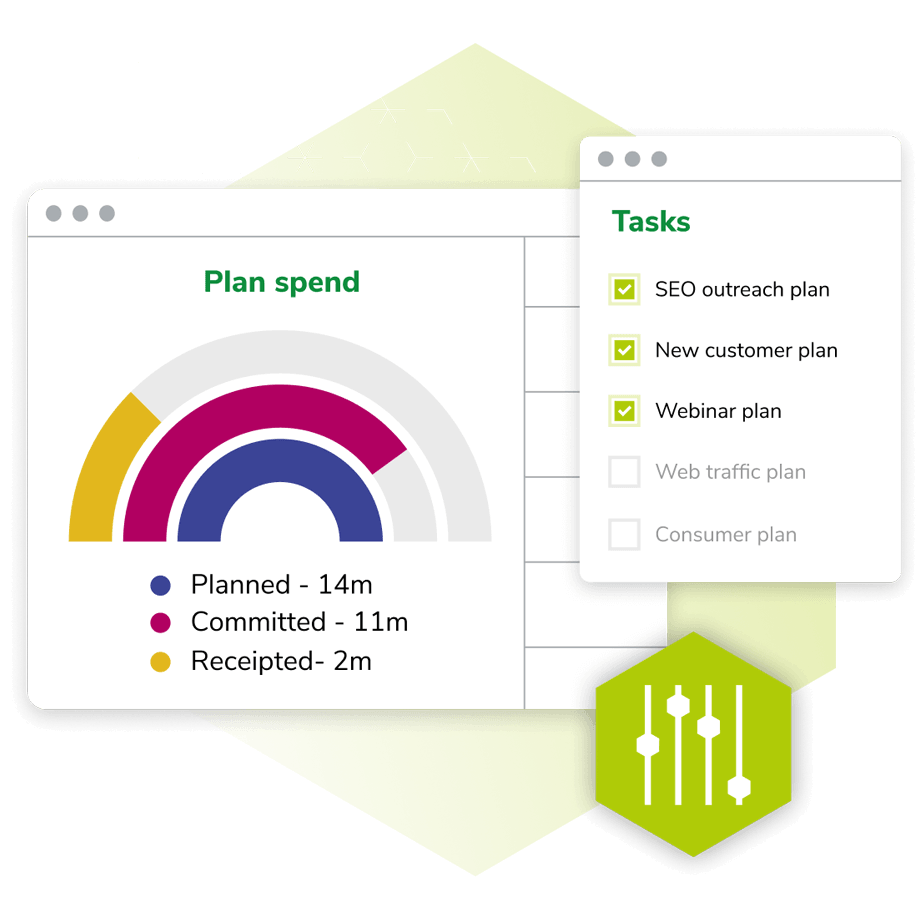
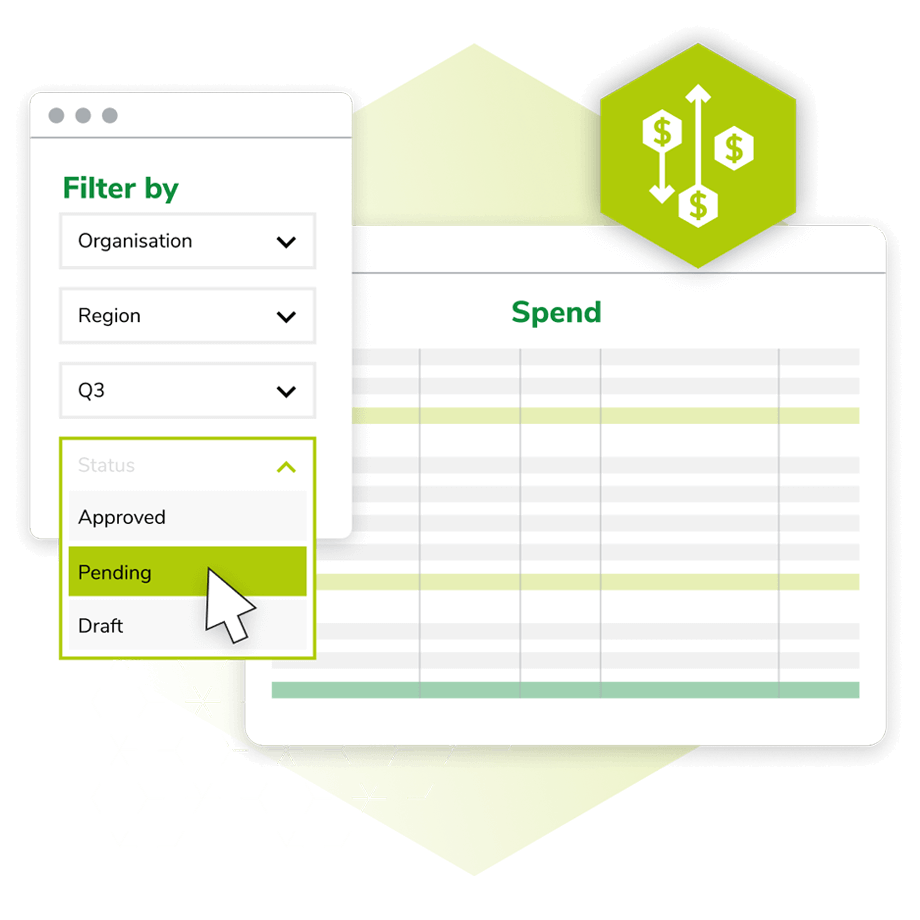
Rather than maintaining separate spreadsheets for budget tracking, campaign planning and spend reporting, Harmoni brings all of these functions into one system. Data is captured once, in a standardised format, and flows through the platform without manual consolidation or rekeying. Marketing, finance and procurement work from the same data, eliminating the version control problems and misalignment that fragmented tools create.
Approval workflows are built into the platform rather than managed through email, reducing delays and ensuring consistency. Spend data is connected to the plans and budgets it was allocated from, providing a clear, auditable trail from strategy through to execution and outcome. Real-time dashboards give leadership visibility into the current position at any point in the cycle, without waiting for someone to manually assemble a report.
Critically, the operational knowledge that would otherwise live with individuals is embedded in the system. Processes, rules and workflows are configured in the platform, which means they are consistent, documented and available to anyone with access. The organisation is no longer dependent on specific people to hold the structure together.
The result is a marketing operations infrastructure that is stable, scalable and resilient. One that supports the weight of a complex, multi-region, multi-agency marketing operation without the fragility that comes from stitching disconnected tools together. No more single points of failure. No more Jenga.
Frequently asked questions
Why do marketing operations stacks become fragile over time?
Marketing operations stacks become fragile because they are built incrementally rather than by design. Each new tool, spreadsheet or workaround is added to solve a specific problem, but collectively they create a complex, disconnected structure that depends on manual processes and individual knowledge to function. Over time, the complexity increases while the resilience decreases.
What are the risks of a stitched-together marketing operations toolset?
The main risks include operational knowledge concentrated in a few individuals, data inconsistencies between marketing and finance, slow manual reporting that produces outdated information, lack of audit trails from plan to spend to outcome, and vulnerability to disruption when key personnel are unavailable. These risks compound over time and can result in missed budget targets, failed audits and lost credibility with finance and the board.
How can organisations consolidate their marketing operations tools?
Organisations can consolidate by adopting a marketing operations automation platform that integrates planning, budgeting, approvals, spend tracking and reporting in a single system. This replaces the need for multiple disconnected spreadsheets and tools, standardises data capture across regions, and embeds operational processes in the platform rather than relying on individual knowledge. Q:chi ) Harmoni is designed specifically for this purpose.
What is the cost of not fixing a fragmented marketing operations stack?
The cost of maintaining a fragmented stack typically exceeds the cost of replacing it, though the imp
Published: 26th May 2026
Last Edited: 26th June 2026

17th August 2026

1st June 2026

22nd May 2026
14th May 2026
5th May 2026











Get your copy of our free guide, The All-Seeing CMO. Find out how you can establish the control and visibility you need by knowing exactly what your team is planning, doing and spending.
Fill out the form to get your copy now.
Services
Q:chi 24/365 Support Q:chi Process Consultancy Q:chi Project Management Q:chi Software DevelopmentInsights
Qchi Insights Library Newsletter SubscriptionPerspectives
Q:chi for Chief Marketing Officers Q:chi for Chief Revenue Officers Q:chi for Financial Directors Q:chi for Channel Partners Q:chi for Marketing Operations Q:chi for MarketersAbout Q:chi
Find out more About Q:chi Read The Q:chi Story Q:chi Harmoni Pricing Q:chi Deployment Q:chi Privacy Policy Q:chi Sustainability Statement Q:chi Modern Slavery Statement Contact Q:chi Here