More than twenty years after the rise of enterprise marketing technology, a surprising number of global organisations are still planning and tracking their media spend in Excel or Google Sheets. Not because spreadsheets are the right tool for managing multi-million pound marketing investments, but because they are familiar, flexible and, in many cases, nobody has seriously questioned whether there is a better alternative.
The spreadsheet became the default tool for media planning and spend management because it was available, adaptable and did not require a procurement process to get started. For smaller operations or single-market teams, it works well enough. But for global organisations managing significant media budgets across multiple regions, agencies and campaign types, the limitations become serious.
What does spreadsheet-based media planning actually look like?
In most large organisations, the reality of spreadsheet-based media planning follows a predictable pattern. Each region maintains its own spreadsheet with its own structure, its own naming conventions and its own way of categorising spend. There is no standardised format across markets, which means that when leadership asks for a consolidated global view, someone has to collect files from every region, standardise the data and stitch it all together manually.
That consolidation process typically takes days. In some organisations, it takes over a week. By the time the numbers are assembled, checked and formatted into something presentable, they are already out of date. Leadership is making decisions based on where the budget was, not where it is now.
There are deeper structural problems as well. In a spreadsheet model, there is usually no connectivity between planning periods. What was planned in the first quarter has no systematic link to what was actually spent in the second. Budget owners, regional leads and finance teams are often working from different versions of the same data, with no reliable way to confirm which version is current. And when a key person is unavailable, the entire reporting process can stall because the knowledge of how the spreadsheet works lives with individuals rather than in the system.
The scale of this disconnect is worth considering. Some organisations spending tens of millions of pounds on marketing are relying on the same tool that a sole trader might use to track monthly expenses. The tool itself is not the problem. The problem is that it was never designed for this level of complexity.
What are the real costs of managing media spend in spreadsheets?
The cost of spreadsheet-based media planning goes beyond inefficiency. It creates blind spots that directly affect the quality of marketing investment decisions.
When every region reports media spend in a different format with different classifications, meaningful comparison becomes almost impossible. Marketing leadership cannot assess which regions are performing most effectively or which agencies are delivering the strongest returns because the data is not structured consistently enough to support that analysis.
Real-time strategic questions go unanswered. When the CMO or CFO asks how much has been spent against plan, or how current spend compares across markets, the answer requires a manual exercise that takes days rather than seconds. By the time the data is ready, the window to act on it has often closed.
Financial accuracy suffers as well. Finance teams relying on spreadsheet data for accruals and forecasting are working with information that is inherently delayed and may not reflect current commitments. This creates difficulties at month-end and quarter-end, when accurate figures are needed most.
And there is an accountability gap. Without a structured system connecting plans to budgets to actual spend, there is no clean audit trail showing how media investment was deployed against the strategy it was meant to support. This makes it harder to justify budgets, harder to demonstrate return on investment and harder to build the credibility with finance and the board that marketing leaders need to protect their budgets over time.
How can organisations move beyond spreadsheets for media spend management?
The shift from spreadsheets to a structured media planning and spend management platform requires a system that does three things well. It needs to standardise how media spend is captured and categorised across every region, so that data is consistent and comparable from the moment it is entered. It needs to connect planning, budgeting, approvals and actual spend in a single workflow, so that leadership has a continuous, real-time view of where the budget stands. And it needs to give marketing, finance and procurement a shared source of truth, so that all three functions are working from the same data.
How Q:chi Harmoni replaces the spreadsheet model
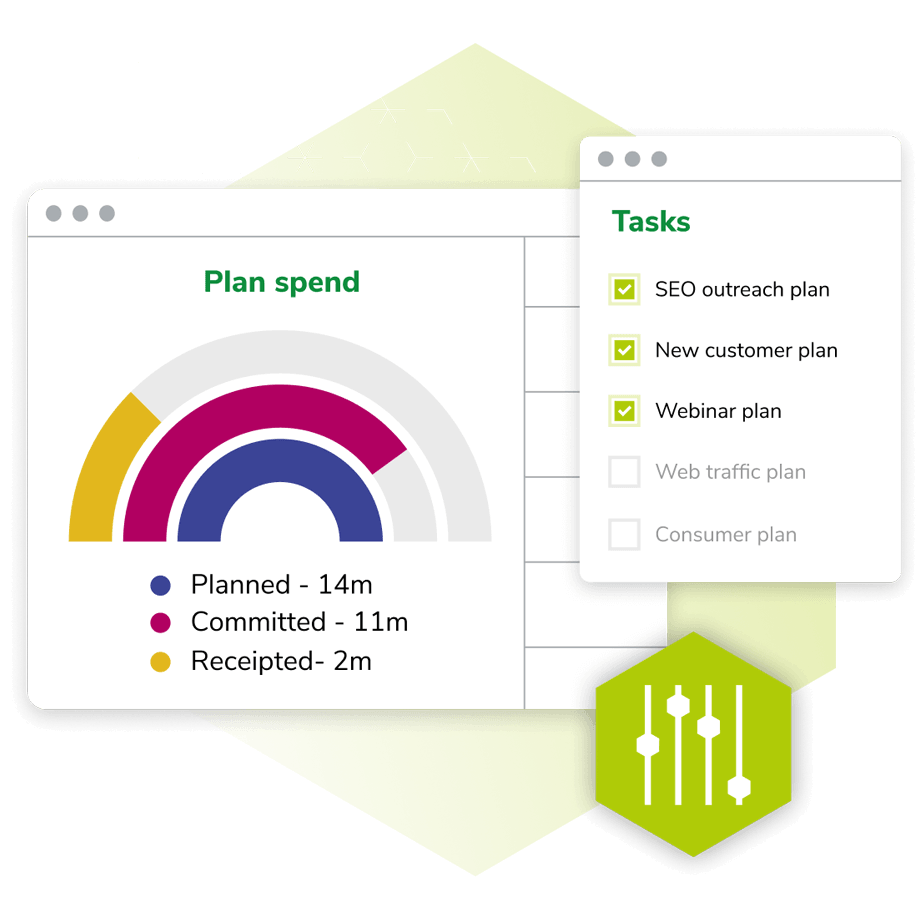
Q:chi ) Harmoni is a marketing operations automation platform that gives global organisations a single, structured system for media planning and spend management. Every region, every agency and every category of spend is captured, classified and connected in one platform, replacing the fragmented spreadsheet model entirely.
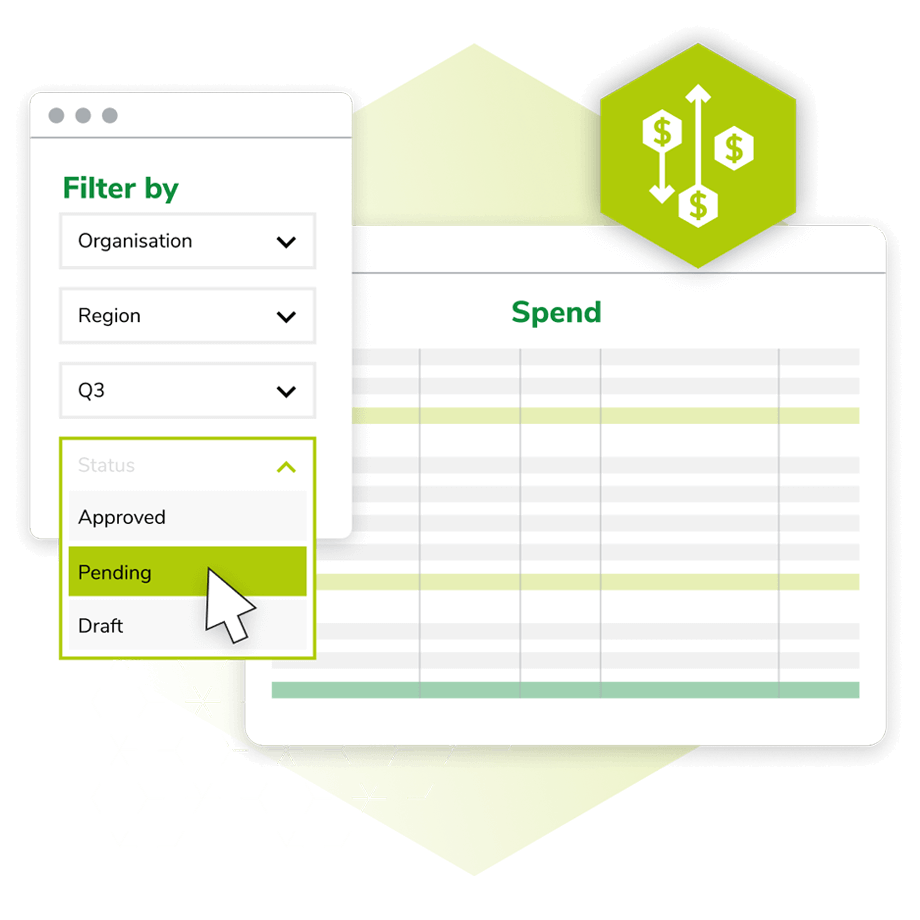
With Harmoni, teams plan, budget and track media spend in one connected system. Regional data is standardised automatically, so global consolidation happens in real time rather than through a week-long manual exercise. Finance, procurement and marketing leadership share a single source of truth that is accessible on demand, eliminating the version control problems and data discrepancies that spreadsheets create.
The platform surfaces patterns and inefficiencies across agencies and regions that would be invisible in a spreadsheet model. Plans can be entered as drafts, built over time, submitted for approval and tracked against the original strategy through to execution. Every pound of media spend is traceable from the plan it was allocated from to the outcome it delivered.
Organisations that have made this transition consistently report that once the data is structured and visible, the quality and speed of their investment decisions improves significantly. Agility increases because leadership can see the current position at any time. Accountability is clearer because there is a single, auditable record of how budget was deployed. And the relationship between marketing and finance improves because both functions are working from data they can trust.
Frequently asked questions
Why do global organisations still use spreadsheets for media planning?
Spreadsheets became the default tool for media planning because they are familiar, flexible and do not require a procurement process to adopt. In many organisations, nobody has formally evaluated whether a better alternative exists. As a result, spreadsheet-based processes persist even when budgets and operational complexity have long outgrown what spreadsheets can effectively support.
What are the risks of managing media spend in spreadsheets?
The main risks include inconsistent data across regions, slow manual consolidation that produces outdated reports, lack of real-time visibility for leadership, version control problems when multiple teams update separate files, no structured audit trail from plan to spend to outcome, and inaccurate financial accruals caused by delayed or incomplete data.
How can marketing teams replace spreadsheets for media spend management?
Marketing teams can replace spreadsheets by adopting a marketing operations automation platform that standardises data capture across regions, connects planning and budgeting to actual spend in a single workflow, and provides real-time visibility to marketing, finance and procurement. Q:chi ) Harmoni is designed specifically for this purpose, replacing fragmented spreadsheets with a structured, connected system.
What is marketing operations automation?
Marketing operations automation refers to software platforms that digitise and connect the operational processes behind marketing activity. This includes campaign planning, budget allocation, approval
Published: 5th May 2026
Last Edited: 25th June 2026

17th August 2026

1st June 2026

26th May 2026
22nd May 2026
14th May 2026











Get your copy of our free guide, The All-Seeing CMO. Find out how you can establish the control and visibility you need by knowing exactly what your team is planning, doing and spending.
Fill out the form to get your copy now.
Services
Q:chi 24/365 Support Q:chi Process Consultancy Q:chi Project Management Q:chi Software DevelopmentInsights
Qchi Insights Library Newsletter SubscriptionPerspectives
Q:chi for Chief Marketing Officers Q:chi for Chief Revenue Officers Q:chi for Financial Directors Q:chi for Channel Partners Q:chi for Marketing Operations Q:chi for MarketersAbout Q:chi
Find out more About Q:chi Read The Q:chi Story Q:chi Harmoni Pricing Q:chi Deployment Q:chi Privacy Policy Q:chi Sustainability Statement Q:chi Modern Slavery Statement Contact Q:chi Here